History
Extraordinary contribution. Prolonged exclusion. Unfinished progress.
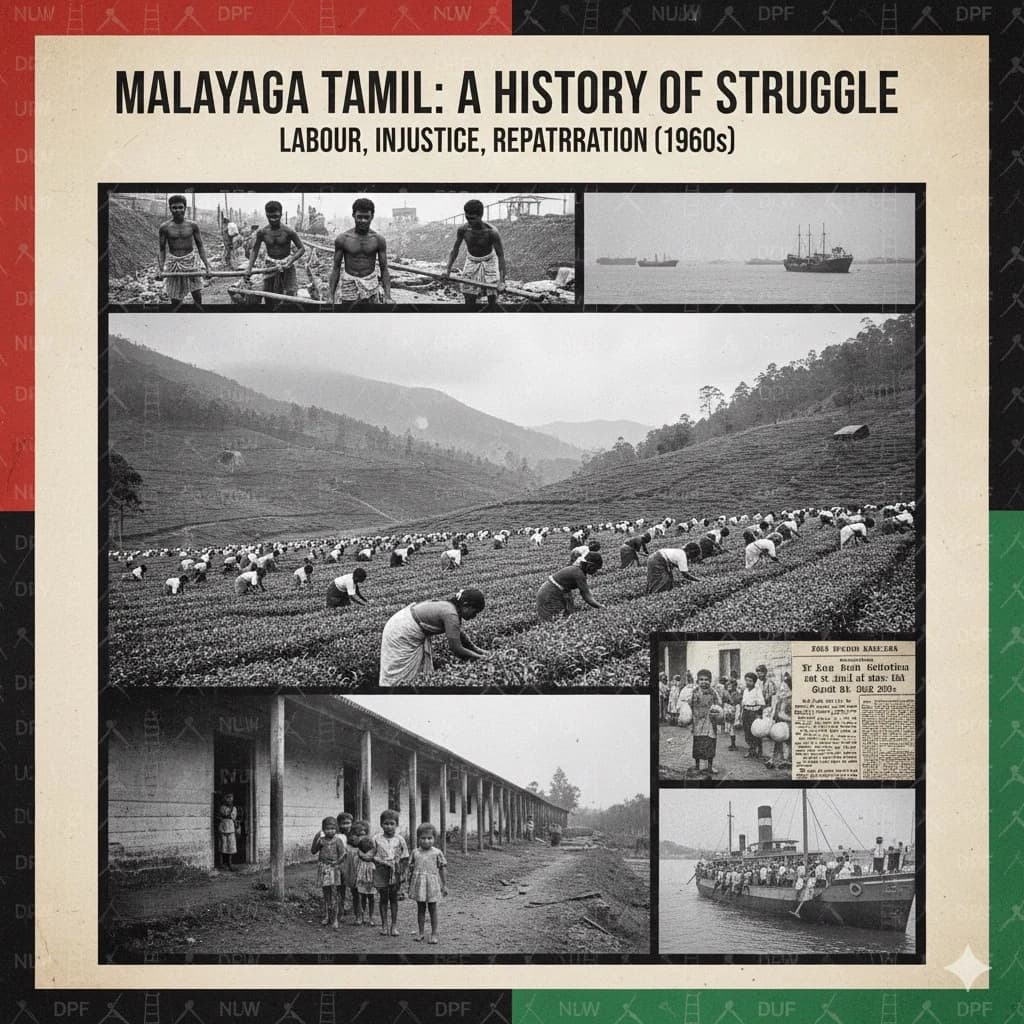
The Indian-Origin Malaiyaha Tamil community descends from workers brought from Southern India during the British colonial period to build the coffee, tea, rubber and coconut plantation economy. For over two centuries it has been central to Sri Lanka's economic development.
19th c.
Building the plantation economy
Workers are brought from Southern India during the British colonial period to build the coffee, tea, rubber and coconut plantations that became the backbone of Ceylon's export economy.
1948
Citizenship taken away
The Ceylon Citizenship Act strips the majority of Indian-Origin Tamils of citizenship and voting rights, rendering over 700,000 people stateless.
1964–74
Repatriation and separation
Bilateral agreements between Sri Lanka and India lead to large-scale repatriation, family separation and decades of uncertainty.
2003
Full citizenship restored
More than half a century after independence, full citizenship is finally restored, yet the community remains among the most socio-economically disadvantaged in the country.
2015
TPA is formed
DPF, NUW and UPF unite as the Tamil Progressive Alliance, secure six Members of Parliament and enter national governance through Cabinet and State Ministerial representation.
2015–19
From representation to delivery
New Divisional Secretariats and local institutions for plantation regions; more than 4,000 houses completed; 10,000 India-assisted houses announced; a dedicated New Villages authority established.
2018
A historic legal reform
Local authorities are empowered to directly serve plantation communities, dismantling long-standing barriers between estates and mainstream local governance.
2019–25
Principled opposition
TPA continues to advocate for fair wages, land and housing rights, education, health and equal citizenship, and champions OCI access for eligible Indian-Origin Tamils.
2035
The unfinished journey, completed
A confident, land-owning, educated and economically mobile community with full and equal belonging in Sri Lanka's national life.
Why this history matters
A new political vision was not optional, but necessary.
The politics of managing labour replaced the politics of building citizens. The focus remained on preserving dependency rather than creating ownership, empowerment, and opportunity.
By the 21st century it was clear the community required not incremental welfare, but structural transformation: from labour to ownership, from line rooms to dignified housing, from exclusion to participation, from isolation to national integration.